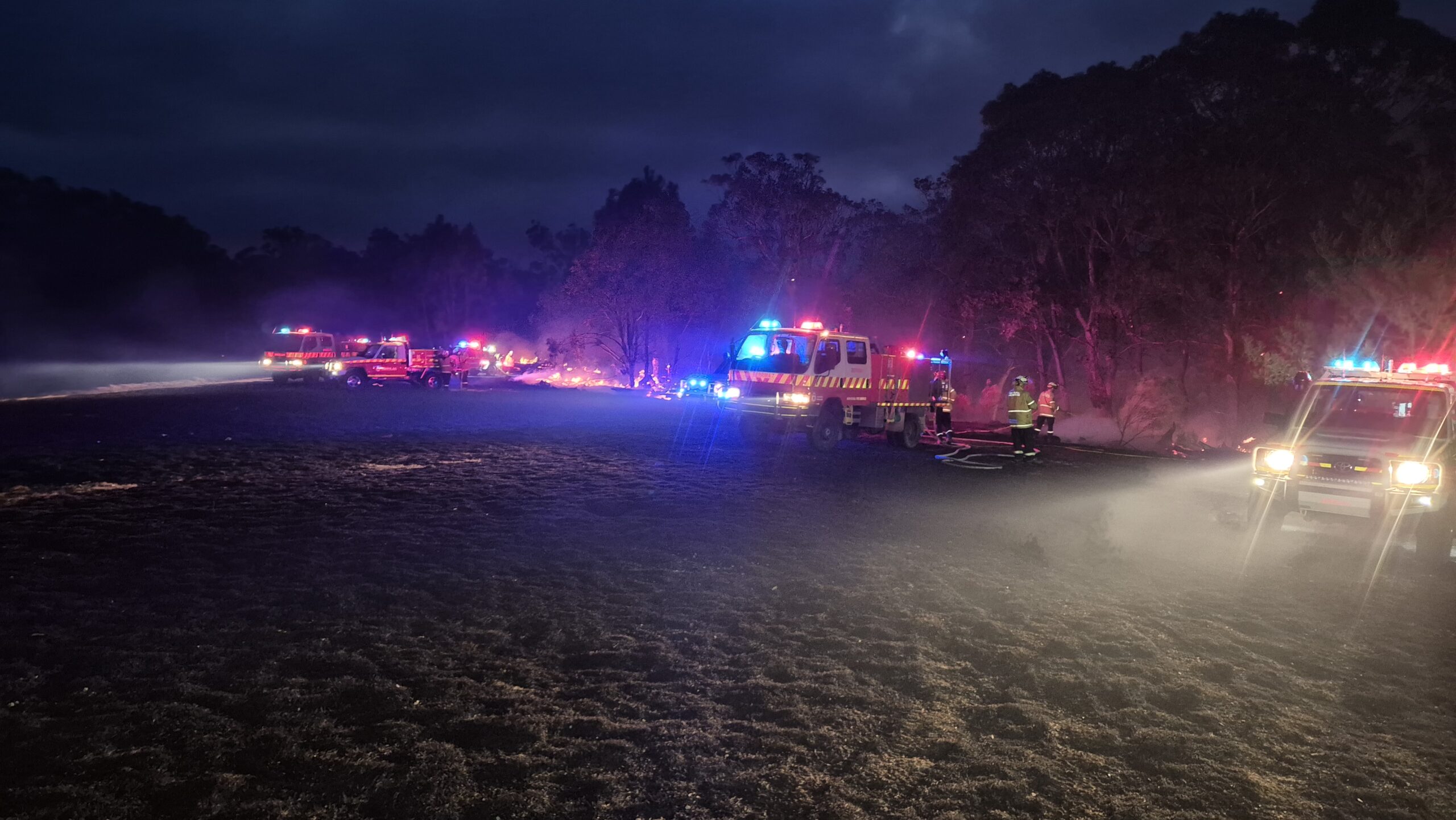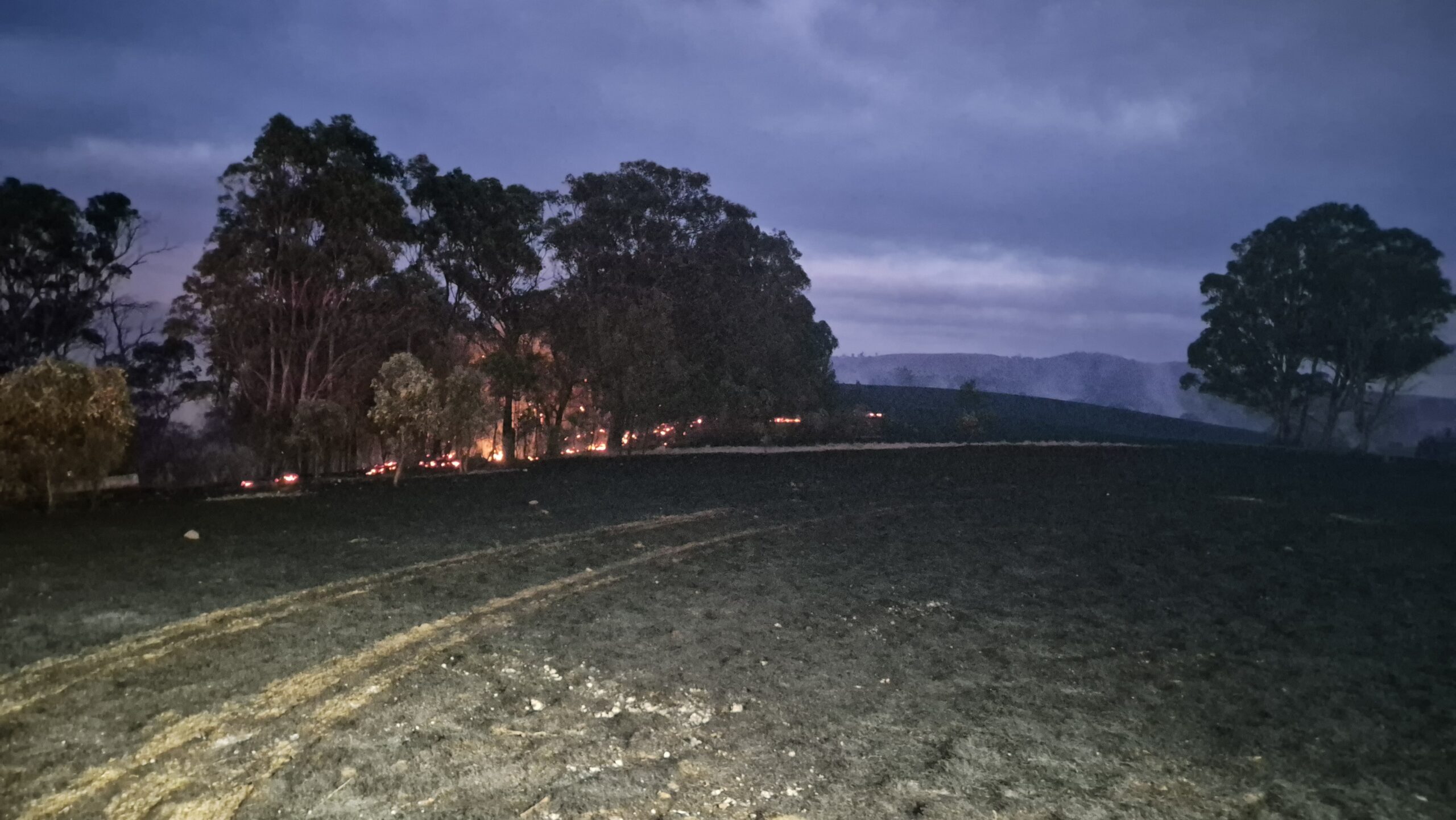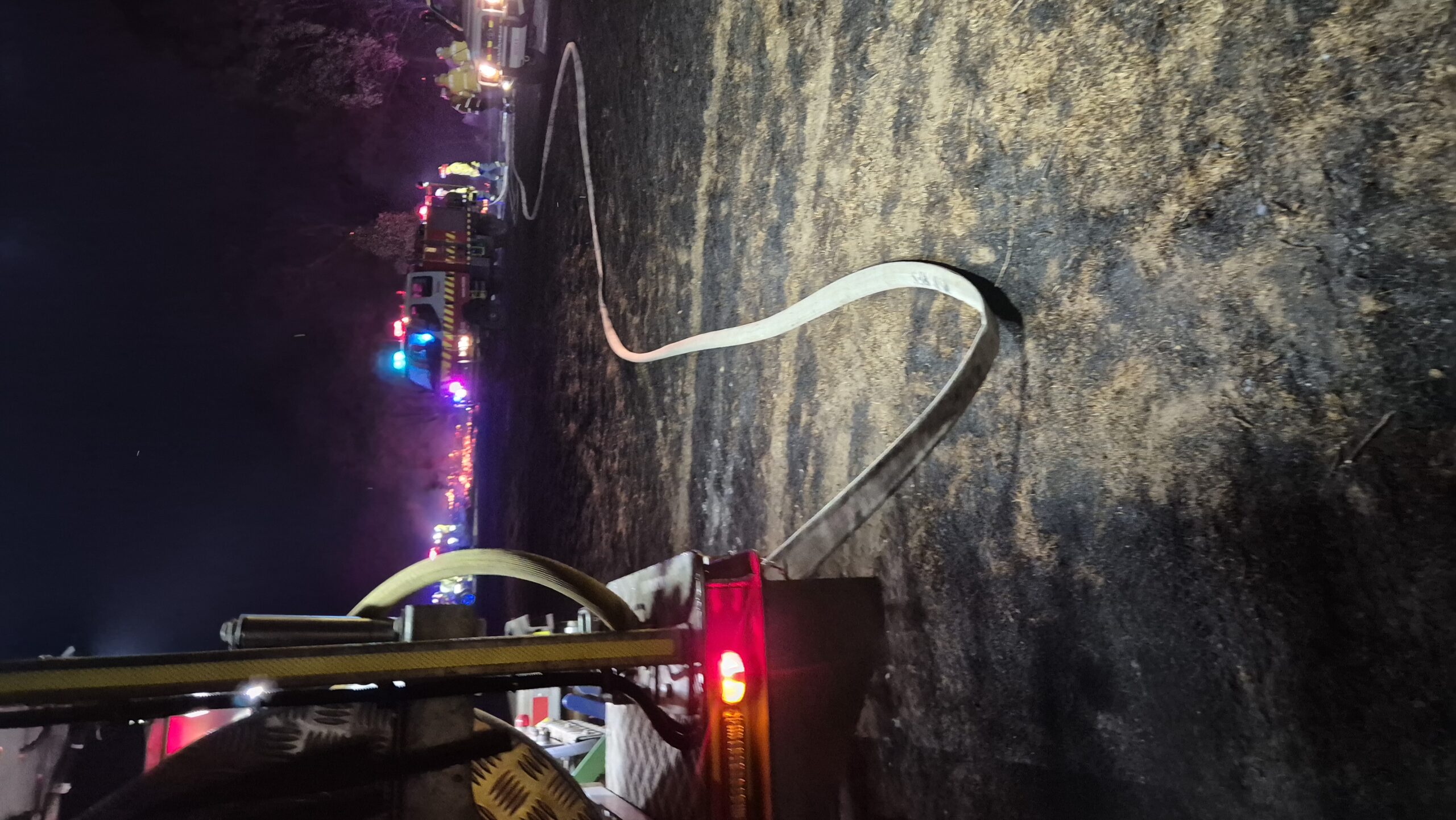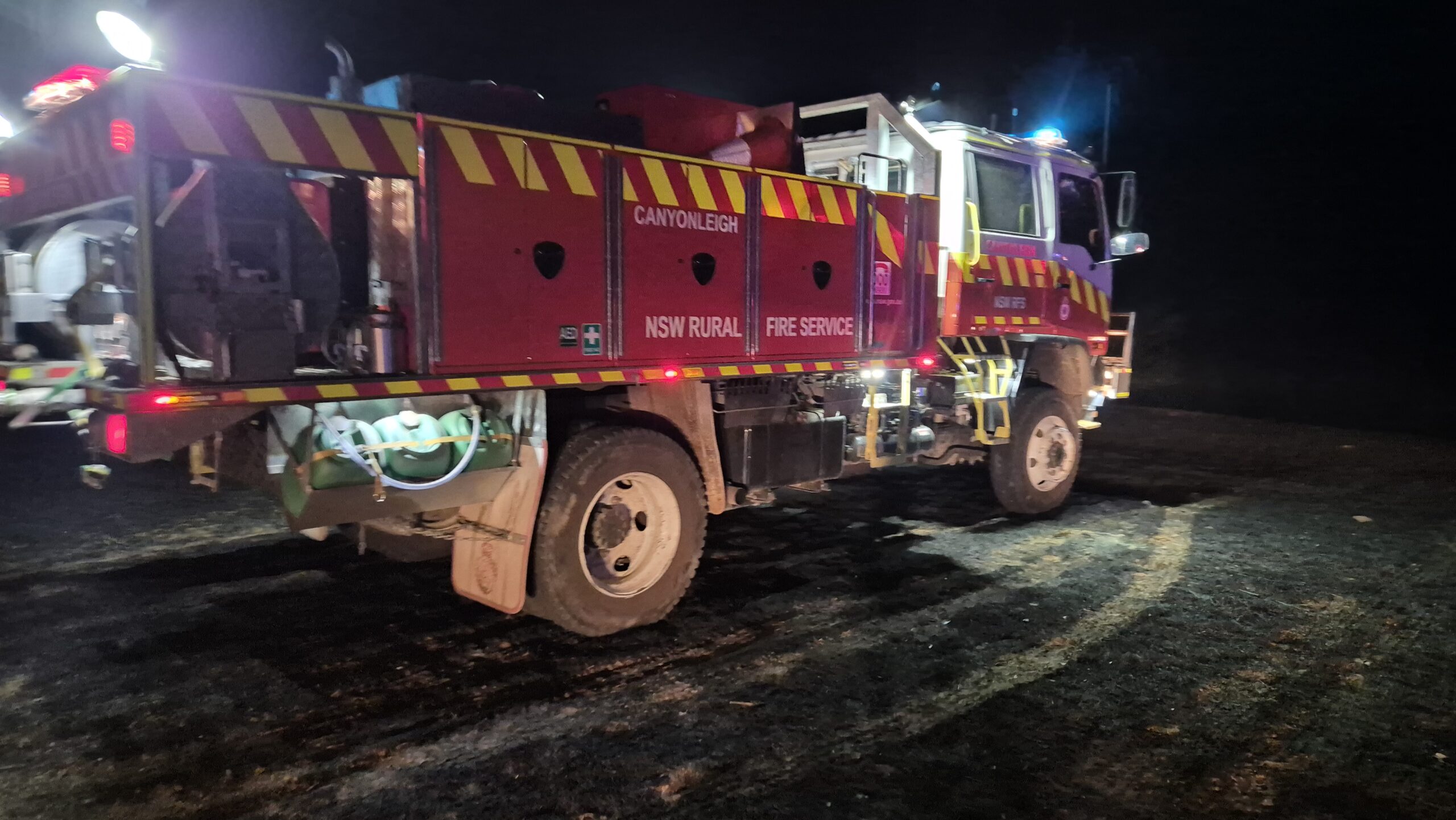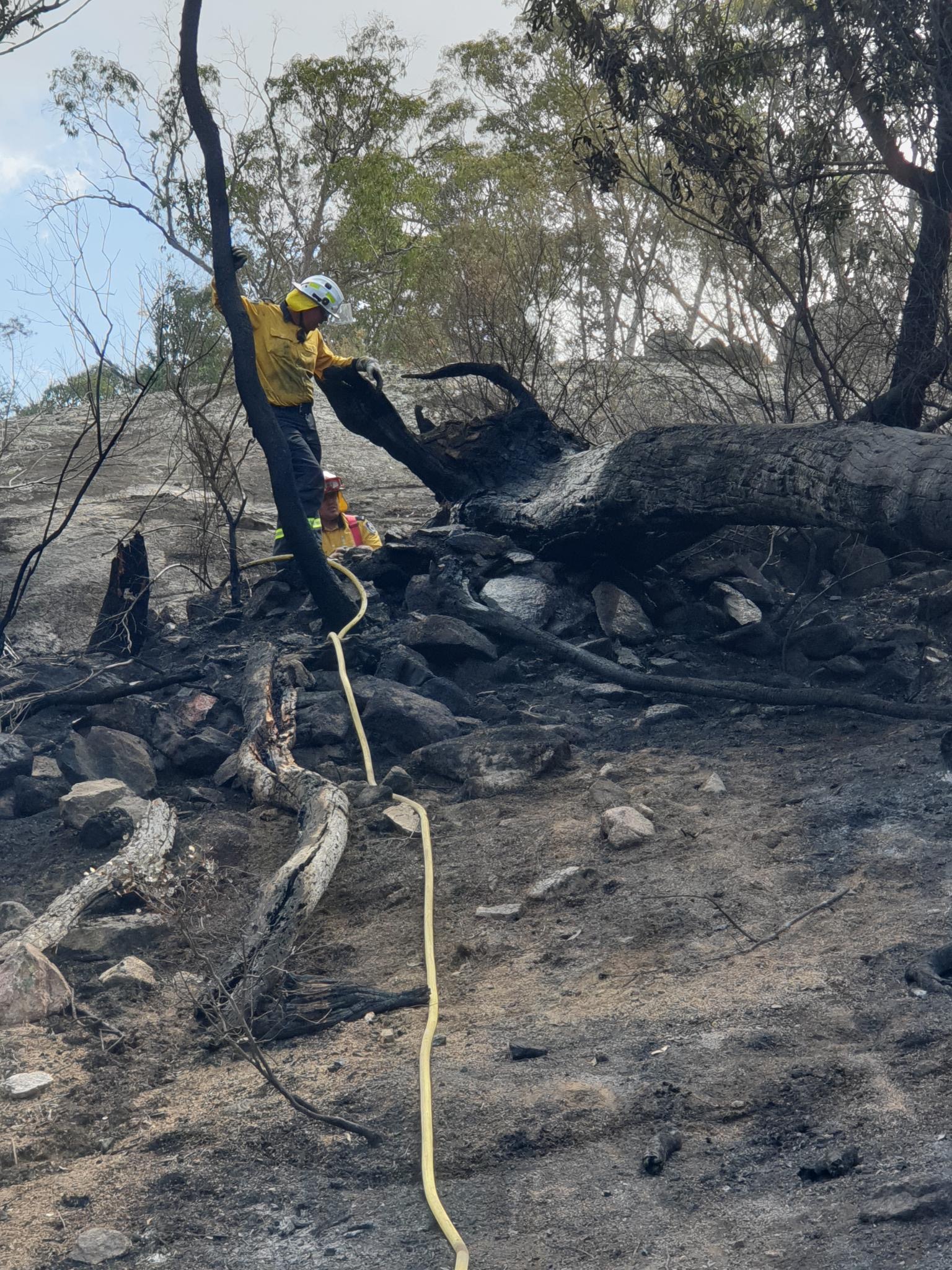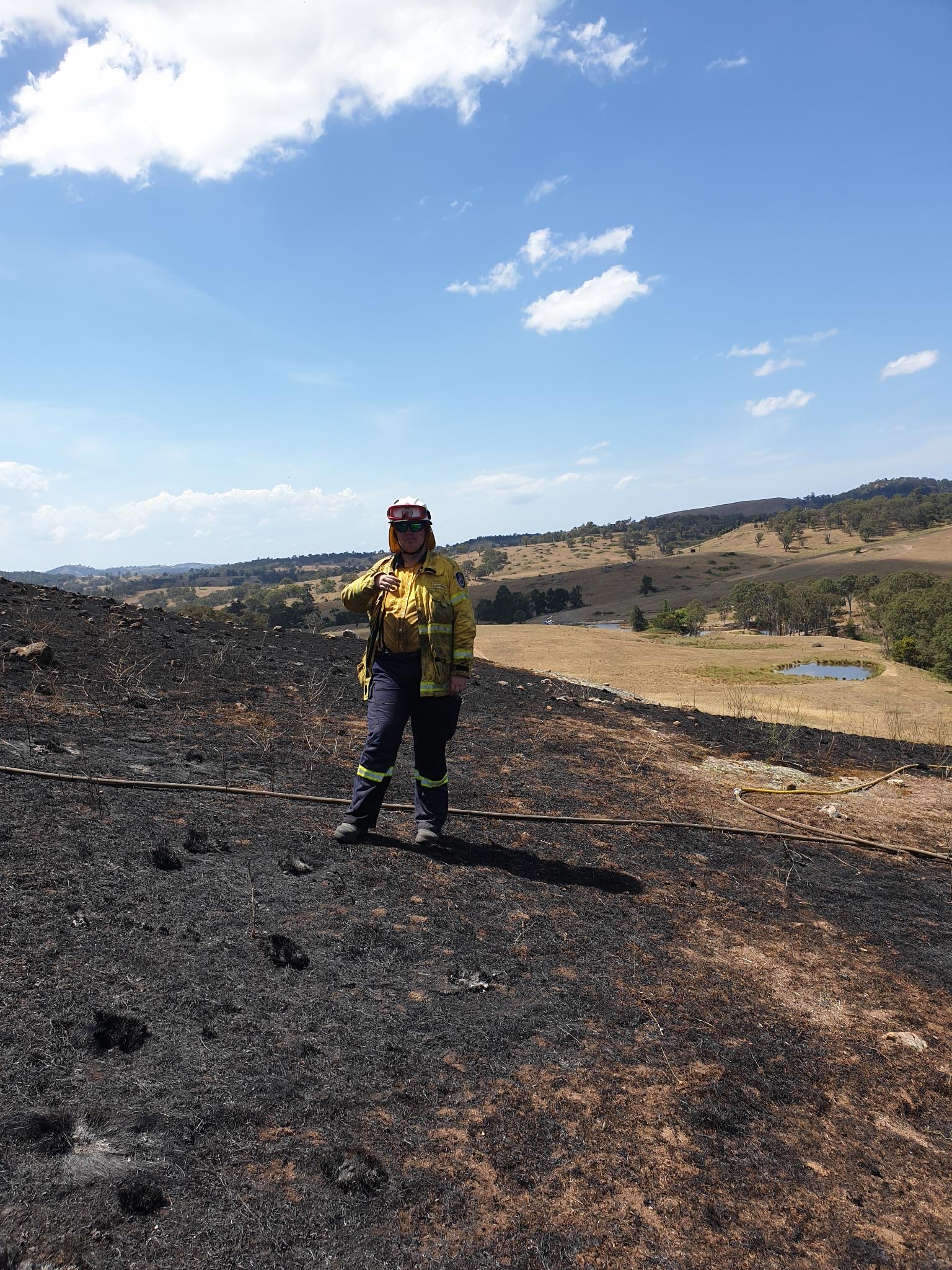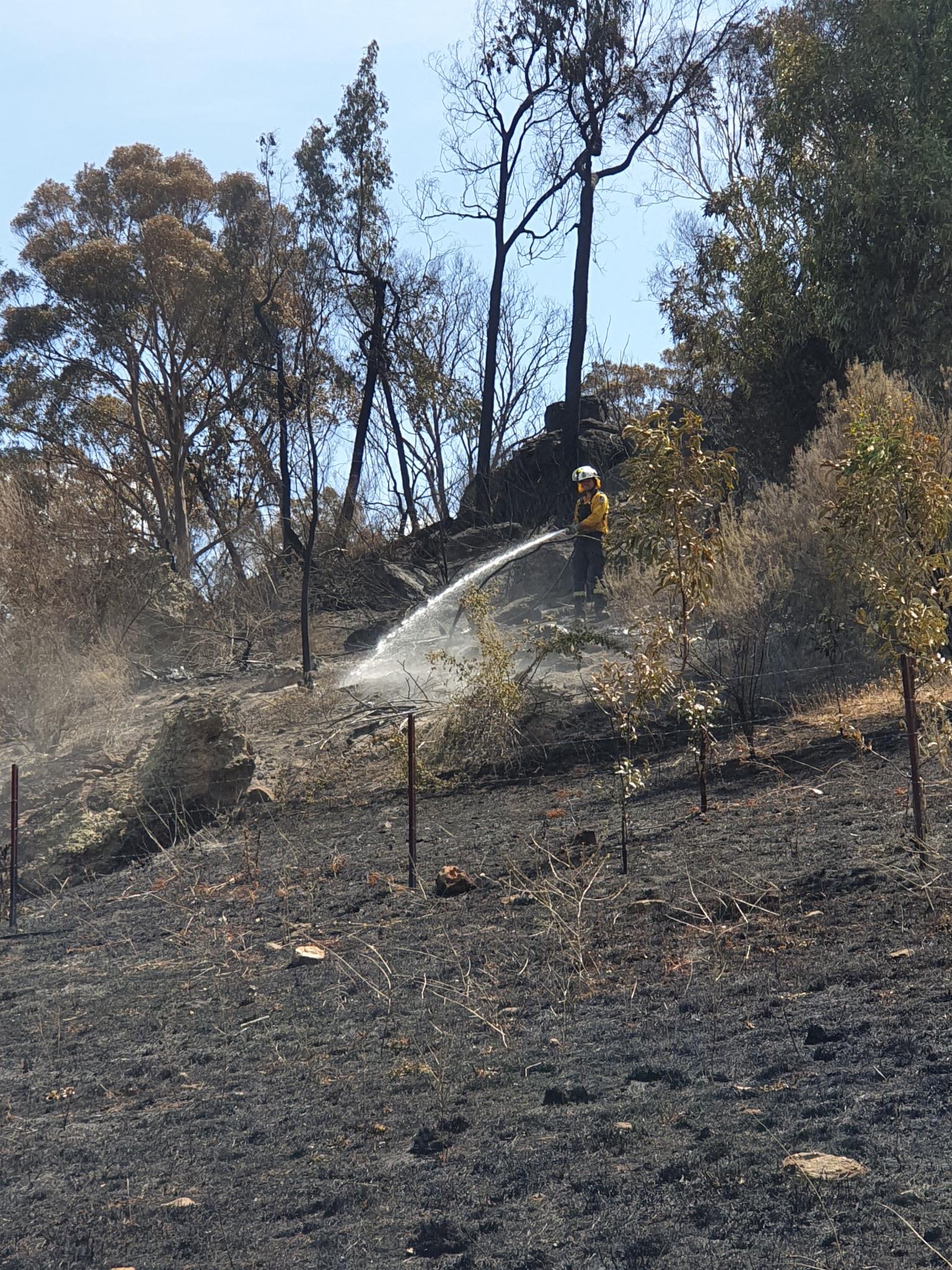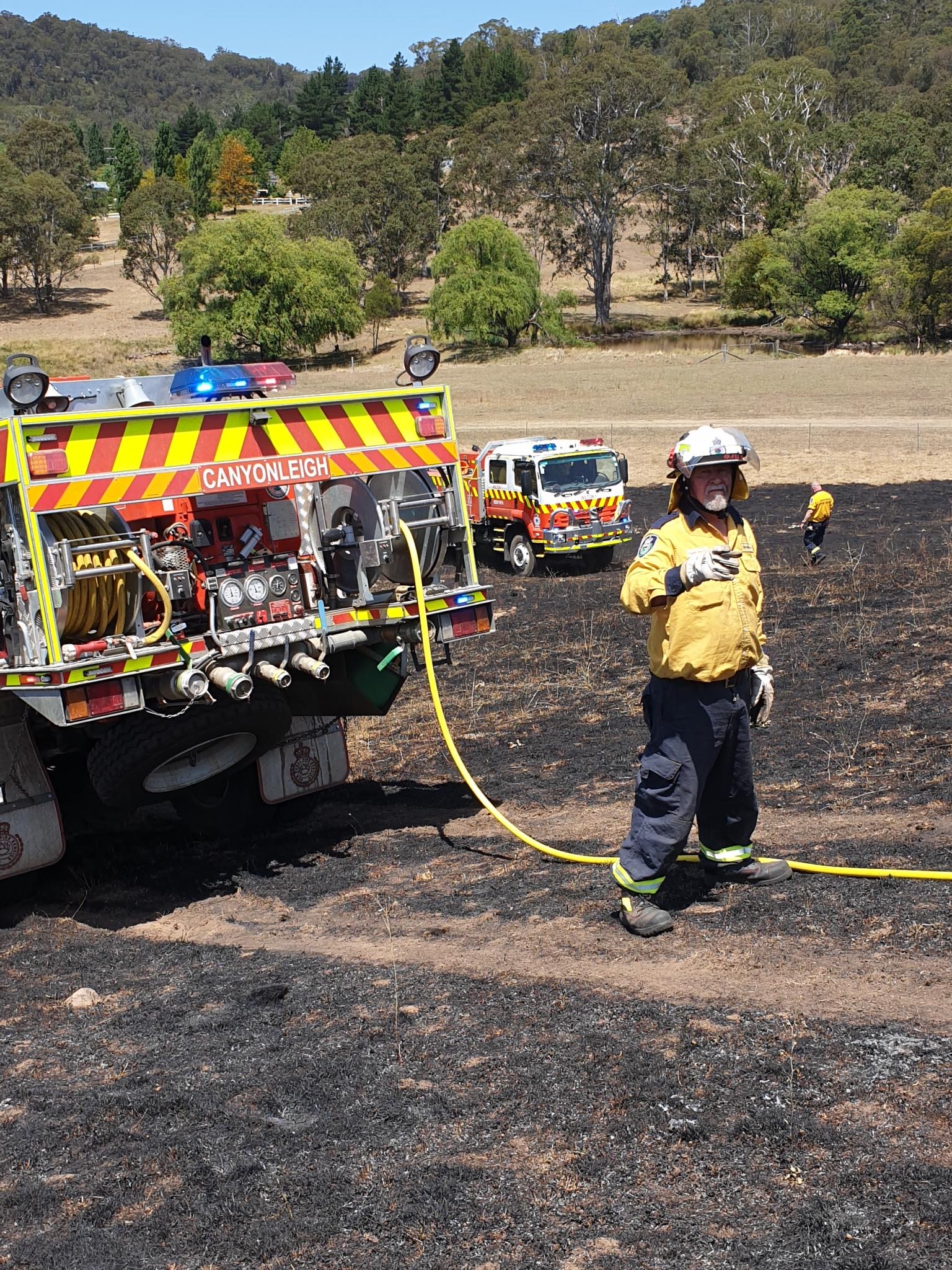
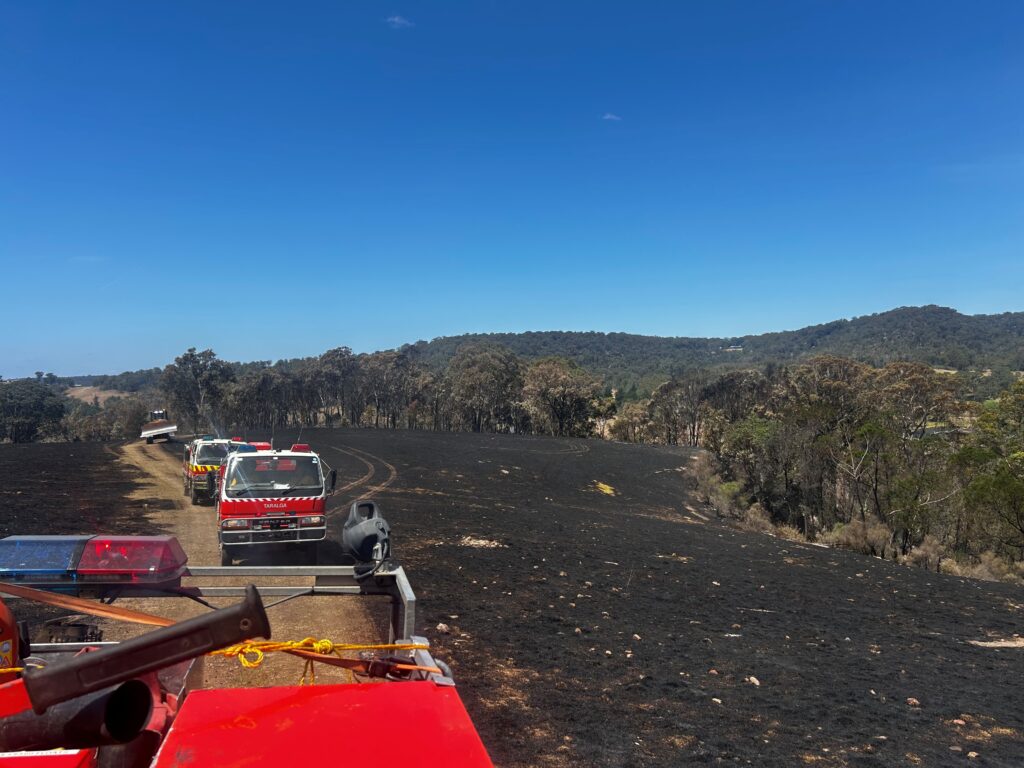
At approximately 4.30 pm on Tuesday 9 December, 2025, a fire was reported in grassland paddocks at the southern end of Hawkshill Road. The property’s owner and a number of contractors working on the site tried to extinguish a small grass fire, however, prevailing south-easterly winds quickly pushed the fire further into the dry grass paddocks triggering an emergency response. RFS crews were soon in attendance with a focus on securing the fire and containing the flanks.
Under the prevailing wind conditions the fire spread in a north-westerly direction and `spotted’ to the west, quickly growing to some 22 hectares. On the first eventing crews from the Canyonleigh brigade were joined by brigades including Avoca, Big Hill, Colo Vale, Bundanoon and Middle Arm.
With limited success, the first responding brigades were able to slow the fire’s progress during the evening as conditions improved and winds died down, however, the fire was still on the march.
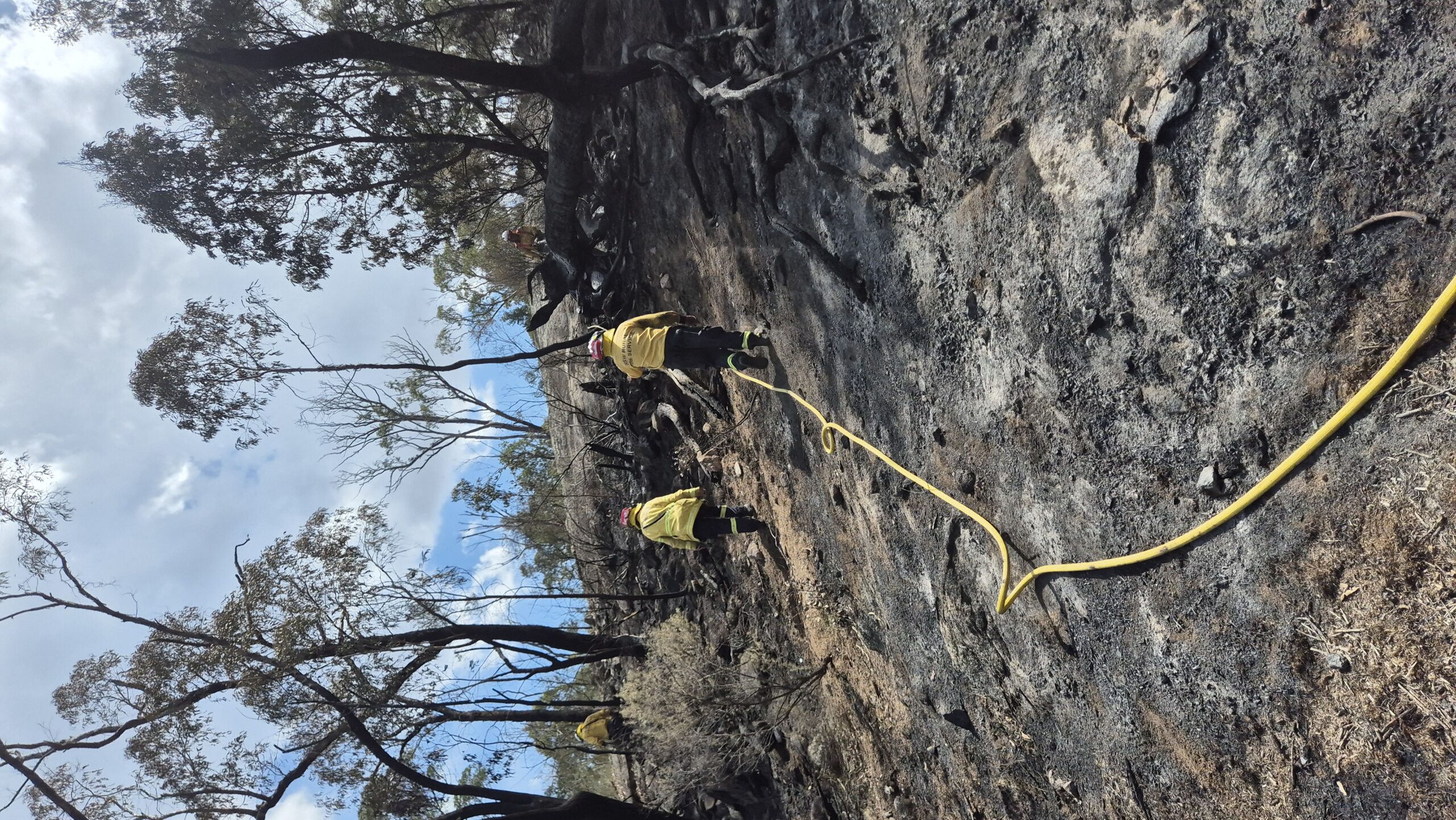
The following Wednesday morning, the fire had grown to some 40 plus hectares and had moved into steep and undulating, rocky terrain with a major sector inaccessible from the ground.
The potential significance of the Hawkshill Road fire did not go without major concern from RFS and NPWS. Had adverse conditions arose, the fire’s potential to grow was significant.
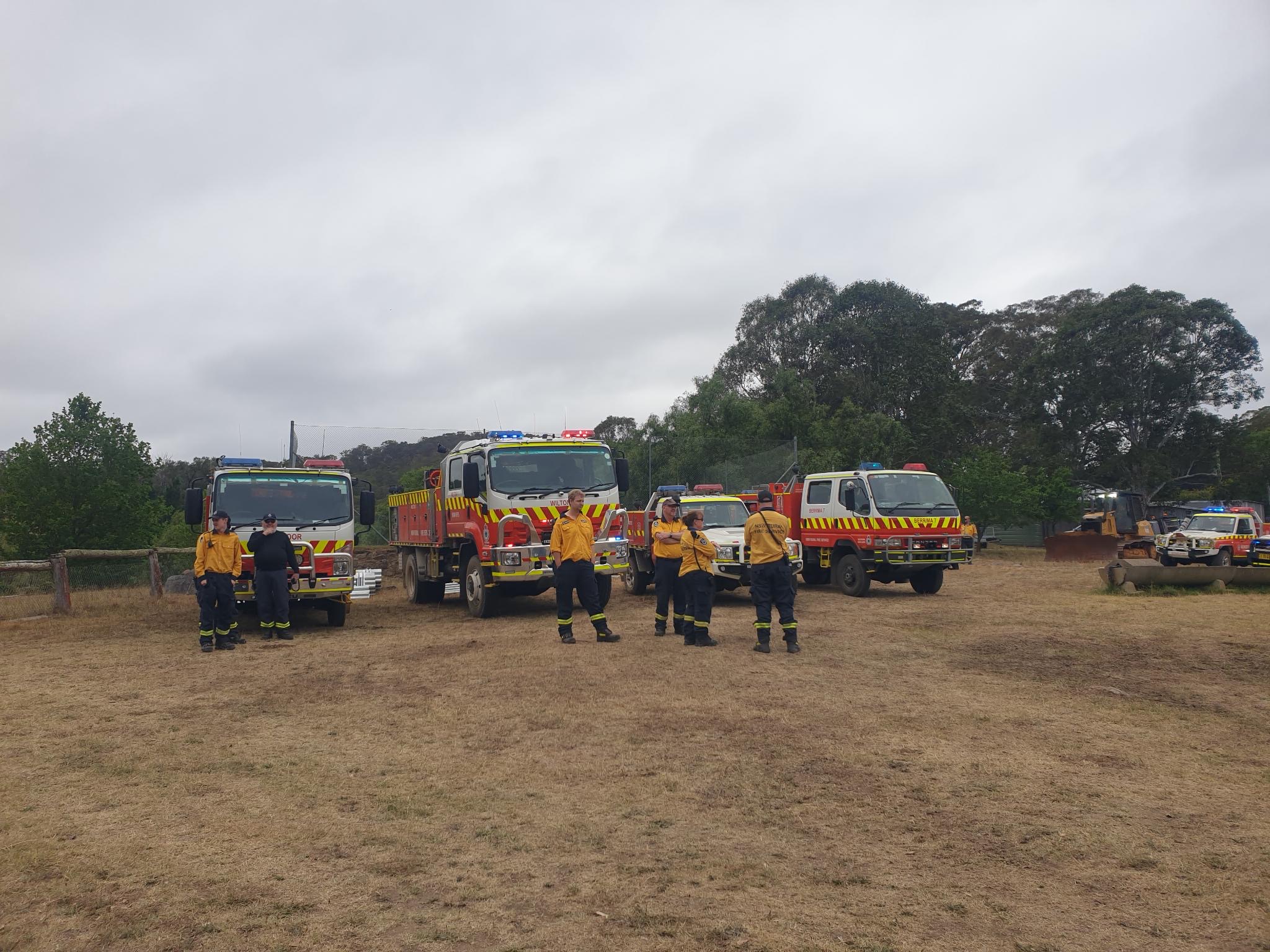
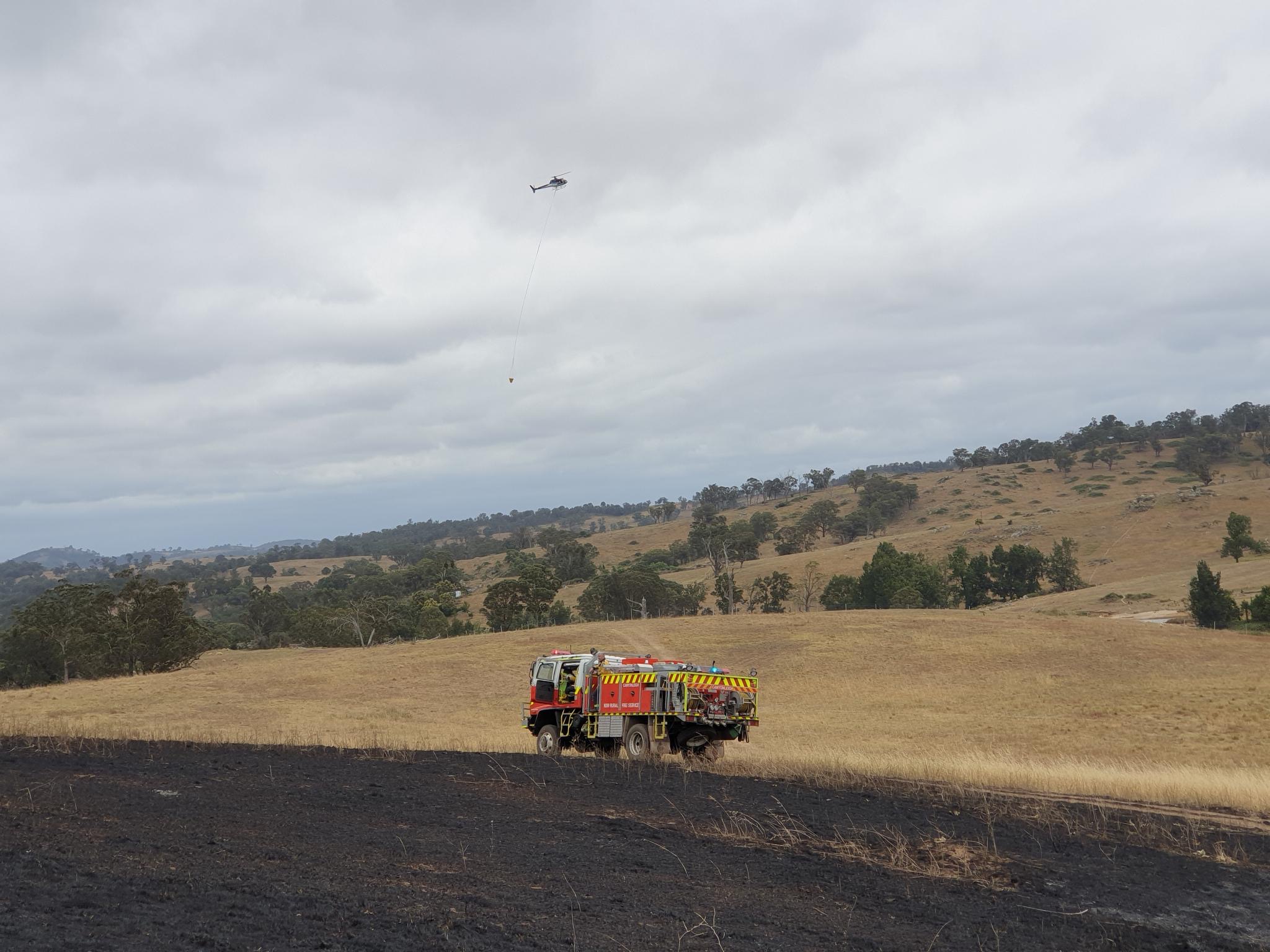
The response on the Wednesday included crews from Southern Highlands, Southern Tablelands, Cumberland and Macarthur regions and National Park Fire Crews. Brigades on the ground were also supported from the air by Large Air Tankers (LAT), helicopters and earthmoving equipment. A Helibase and resources were established at an airfield on Tugalong Road – minutes from the fireground.
A full manifest of brigades and support vehicles is included at the end of this article.
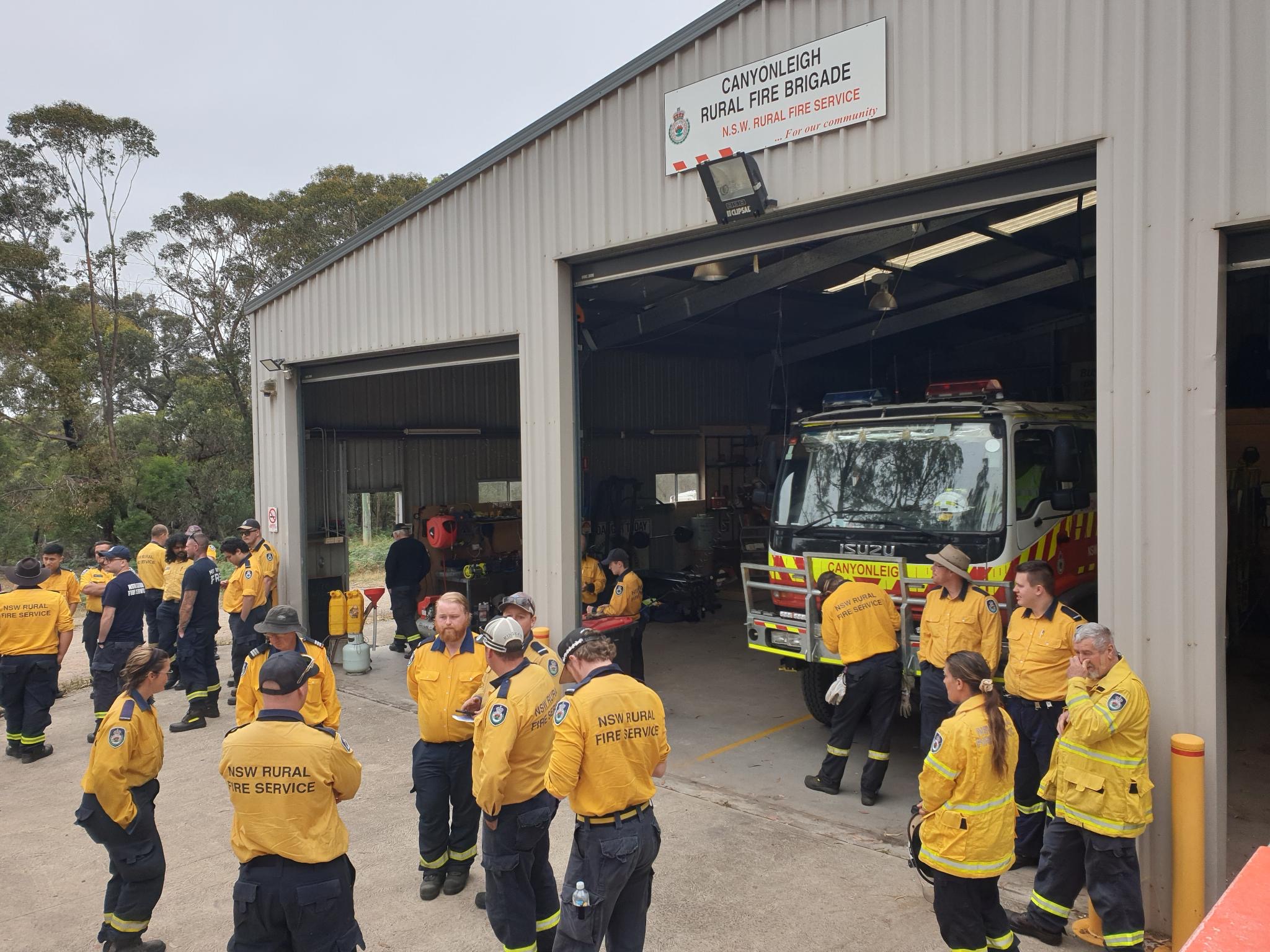
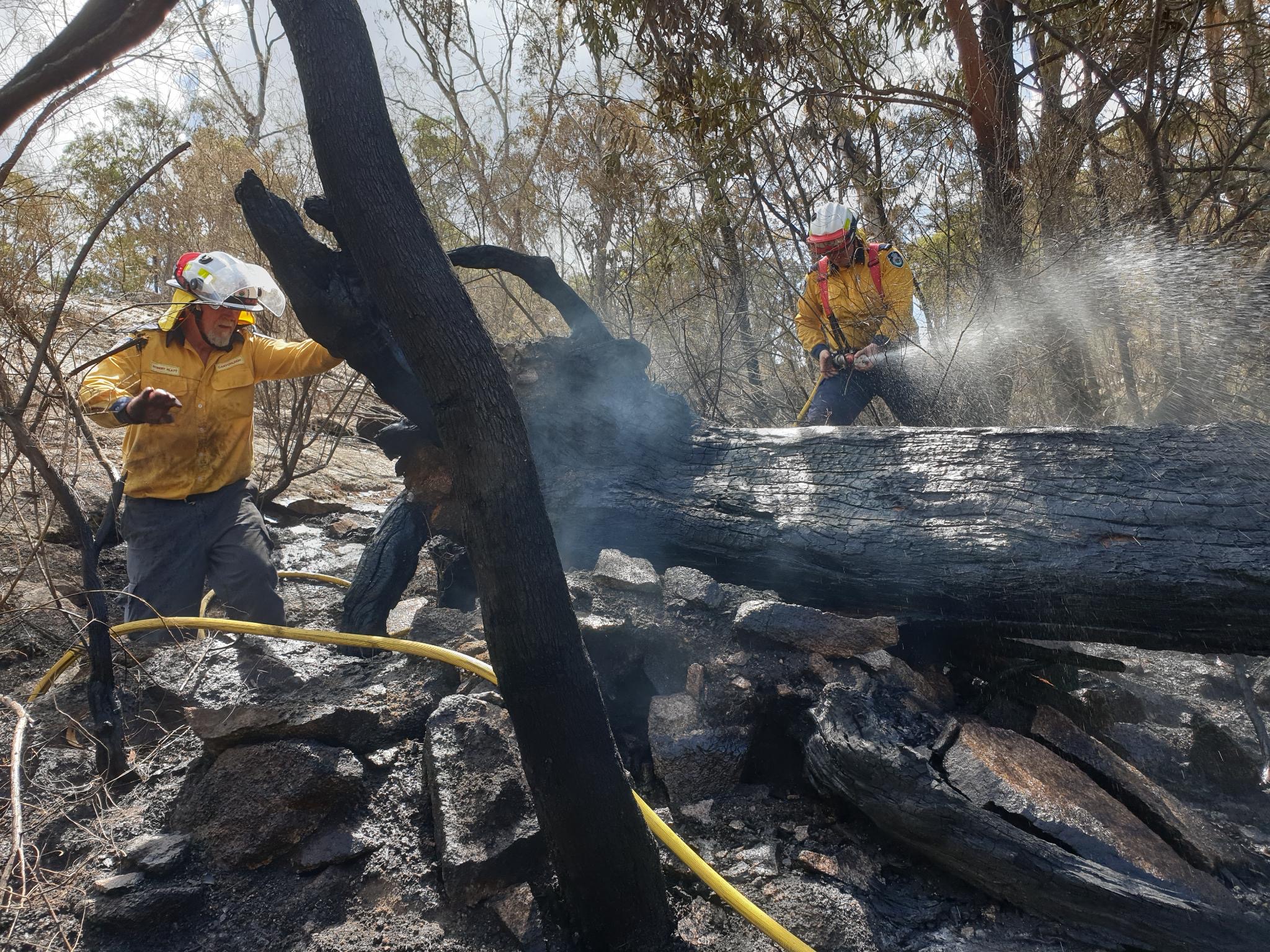
Following detailed briefing undertaken at the Canyonleigh Fire Shed each morning prior to moving onto the fireground, instructions were to prevent impact on any communities and the nearby Kerrawarry Nature Reserve, undertake close containment, black-out and mop up with the fire to be at patrol status on or before 13 December.
The fireground was broken into three sectors, with brigades allocated to each sector under a nominated sector leader. Air assets, including the Marie Bashir LAT, strategically dropped retardants on containment lines, while helicopters with buckets pinpointed actual hot spots.
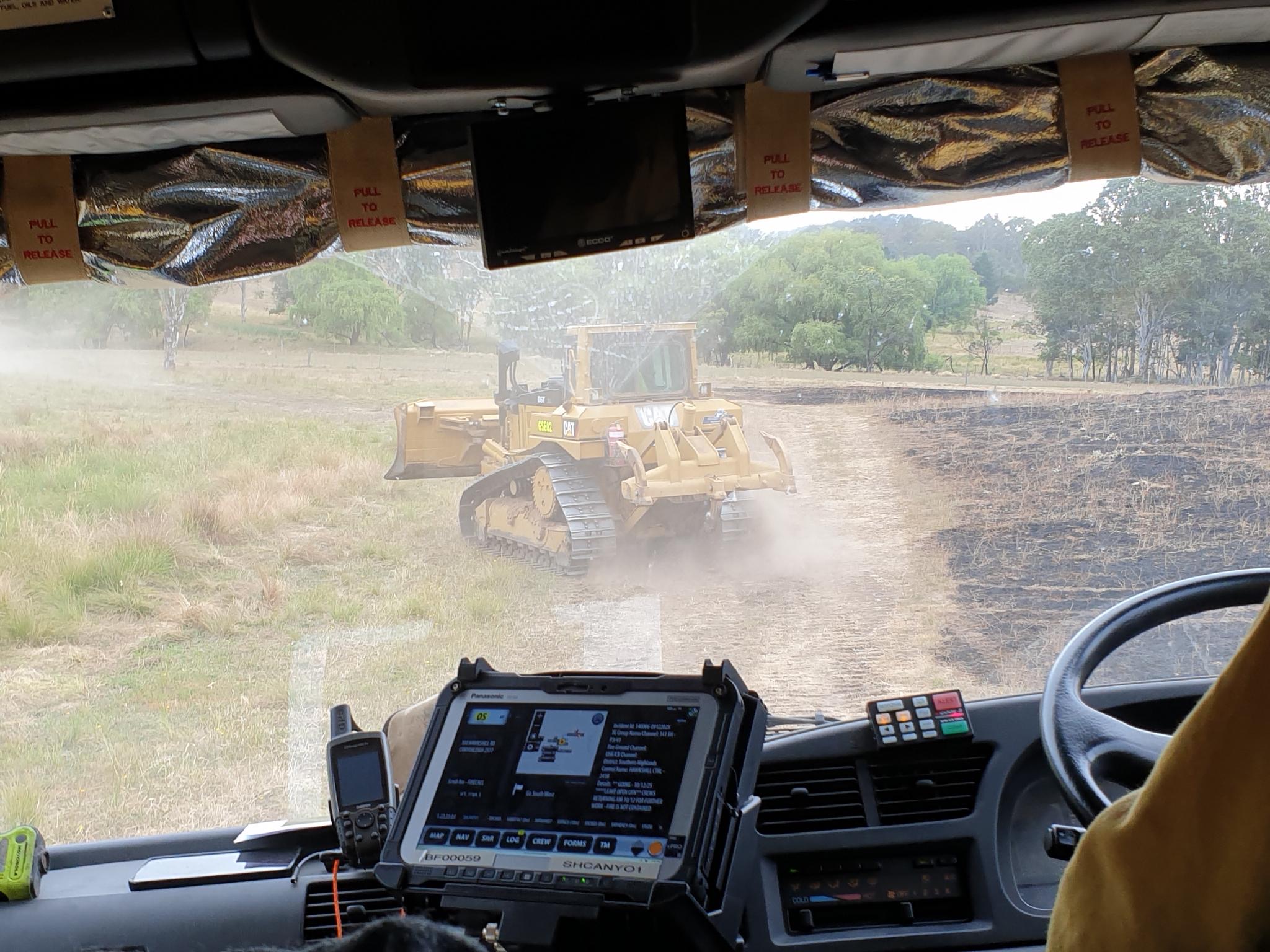
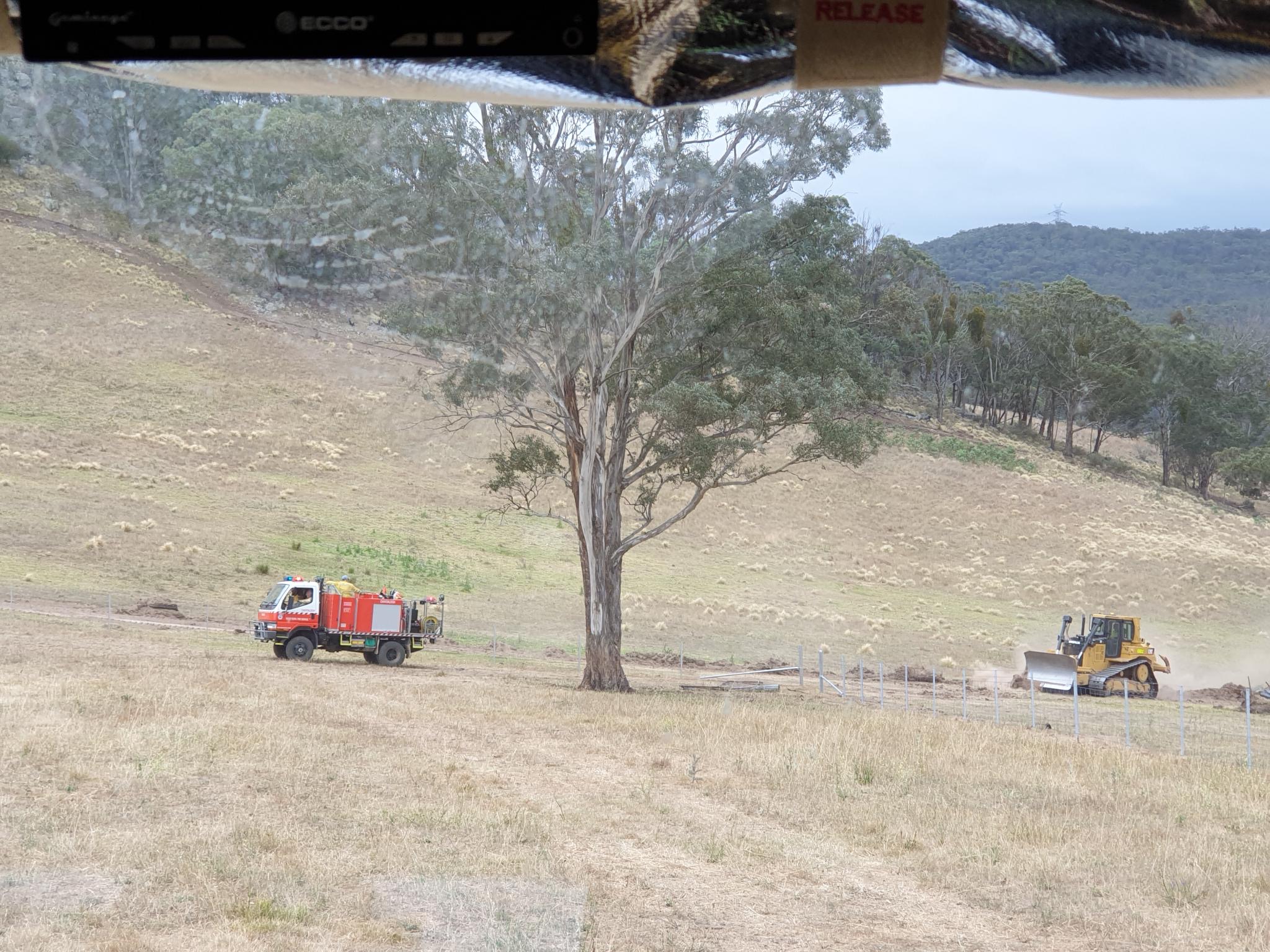
To ensure brigades were able to access all sectors safely, and to get closer to the fire, a bulldozer was used to cut new trails and to remediate the unmaintained Ditley Fire Trail.
The significant efforts by RFS brigades and resources on the Tuesday, Wednesday and Thursday bought the incident under control. Late on the Thursday all brigades were released and the assets and staff at the helibase were also released. Patrolling the site and blacking-out any last `smokers’ was left to the Canyonleigh Brigade. On Tuesday 16 the Hawkshill Road fire was officially declared is extinguished.
In terms of a major bush fire event, the Hawkshill Road event was quickly contained and managed by the sheer number of assets the RFS managed to enlist to `jump onto a fire’ that could have has serious consequences should weather conditions changed.
For the Canyonleigh Brigade, the event showed how well structured its operational structure is: we had a large number of volunteers (in rotation) on the fireground (2 full crews each day), our shed was open to assist with RFS administration, assembly points and open to any member of the public that wanted to discuss the event with a brigade member. Likewise, our social media feeds kept the community abreast of the fire’s management, advice and status and responded to any concerned enquiries. Over the 4 main days of the event, social media posts on the Canyonleigh RFS Facebook page attracted some 90,000 plus views. In fact, an image of the fire taken by our Captain at night captured 21,645 views!
Over the six days of the Hawkshill Fire, the following members were involved:
Brett Bannerman, Peter Attreed, Ben Willersdorf, Luke Willersdorf, Frances Crown, Lisa McGrath, James McGrath, Paul Huggan, Rob Platt, Jasper Pendlebury, Jenny Maddocks, Greg Hook, Helen Phillips, Terry Biscoe, Claudia Douglas, Jeff Cohen, Chloe Smith.
For a number of volunteers, this was their first bush fire incident – and they were great!
RFS resources for this event were significant, and we thank the Brigades and their volunteers for their time and magnificent efforts. The Hawkshill Road fire was managed by Divisional Commander, Group Captain, Peter Lockerbie with support from Group Captain Andrew Neale.
Southern Highlands
Canyonleigh Mittagong Tahmoor
Wilton Wingello Pheasants Nest
Berrima Colo Vale Avoca
Bundanoon
Moss Vale
Penrose
Southern Tablelands
Goulburn Parkesbourne Taralga
Middle Arm Big Hill Wallaroo
Marulan
Cumberland/Macarthur
Georges River Marsden Park
Macarthur Eastern Creek
National Parks
2 x Fire Crews
Aviation
Helicopters (bucket) x 2
LAT x 2
Aviation Fuel Truck
Ground Crew & facilities
Other
Southern Highlands Bulk Water Tanker
Some 6 x PCs (Personnel Carriers)
RFS Catering and Support